

This post is adapted from “Embracing the Teaching Lifestyle” (March 14, 2025), originally published on the Personal Finance for Educators blog.
This post aims to address one question: Why do I care about personal finance for educators?
In the world of personal finance, the motivations of different creators can be opaque. I consume a lot of personal finance content, from books to podcasts, and I think it’s easy to get lost inside a particular approach or mathematical path and forget to ask why this person is making the content I’m consuming. Compensation in the financial services industry has often been hard for consumers to see, and the growth of influencers and stars in the personal finance space has created new opportunities for that opacity to continue.
My answer to “why do I care?” rests on my views about the value of the teaching profession, which have been shaped by my own experience as a classroom teacher and teacher educator, and by the many educators I’ve learned from along the way. I’m grateful to the folks who share their joys, wisdom, and challenges.
I’m not trying to make a claim about what teaching is like for everyone, since context matters. I’m hoping this post helps folks encountering my content for the first time understand where I’m coming from.
Stepping back from the numbers
A personal finance project spends a lot of time on numbers and systems. There is a lot to learn about salary schedules, pension formulas, and contribution limits. Those numbers and systems matter, but focusing only on them can overshadow the reasons many of us chose this profession in the first place. Teaching offers a way of being and living that can be absent from other careers. I’ve often heard people say that teaching is more than a profession, that it’s a calling. I generally agree, but I’d like to be more concrete about what that calling offers.
Ideas that center the work of teaching
As I see it, the practice of being a teacher, which I call a teaching lifestyle, has three pillars: relationships, growth, and community. There are certainly other ideas one could add, but I think these three are the base upon which much of our daily interactions occur. They come up consistently when I ask prospective teachers why they want to teach, and when current educators reflect on why they love the work. These ideas sustain me in my pursuit of relevant personal finance content for educators, and they keep me grounded in why I’m here.
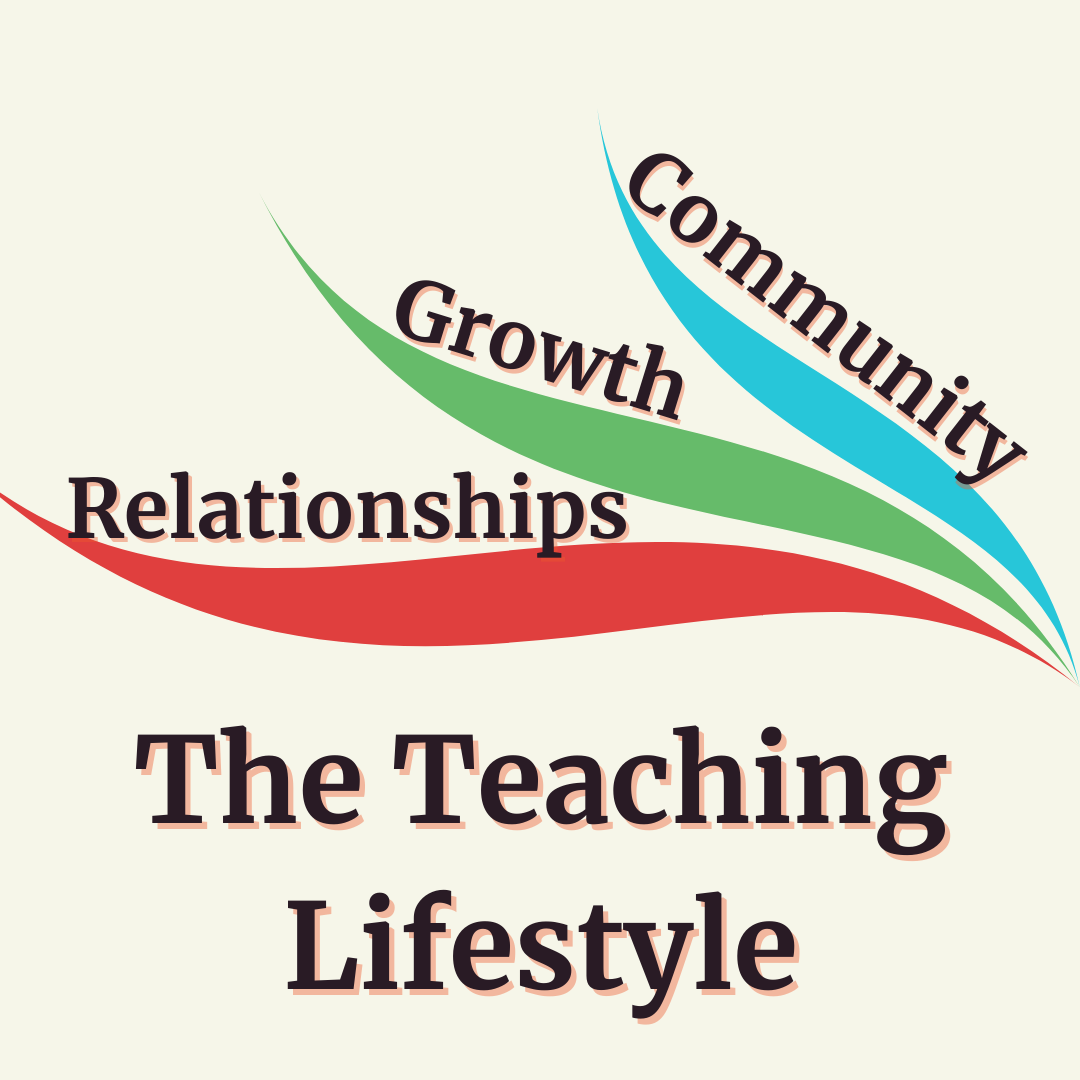
Relationships. Teaching is the opposite of a transactional relationship. The work is awash in relationships with students, families, colleagues, and community partners. You meet people from all walks of life whom you might never otherwise meet. You encounter students and colleagues who go on to do wonderful things, and you can feel a sense of connection to their work. Some relationships are small and specific to one classroom, with its traditions and inside jokes. Others last a lifetime. Some are hard, and some leave you wishing things had turned out differently. For me, the joyful ones are a reminder that you can be a source of inspiration, and they have outweighed the difficult ones.
Growth. Teaching is a transformational profession. Through education, we help students build knowledge, skills, and practices that can make a difference in their lives. As our students grow, so do we as educators. I’m a vastly different educator than I was in 2005, and my students, colleagues, and experiences all shaped that change. The work puts educators in the dual role of learner and teacher. I find this focus on transformation to be motivating and engaging.
Community. Teaching is situated within communities. Schools are vibrant community spaces, and educators are their caretakers. We want students to find belonging in our classrooms, hallways, and buildings. Our relationship to this community changes as we progress in our careers. Students are curious, and that curiosity leads them to learn more about us. Early in a career, it’s natural to keep some separation between professional and personal selves. I describe this as developing a “teacher’s coat,” a layer we wear to establish identity, set boundaries, and stay professional. At first the coat is thick, and it might cover up a lot of our identity outside of schools. Over time it tends to wear thin in places, and I think that’s a beautiful thing. Students begin to see us as full people with joys, passions, concerns, and challenges.
What this view leaves out
This view doesn’t capture everything. Teaching is demanding, the early years often come with an unreasonable workload, and compensation is a real concern for many educators. Some days and some relationships are hard, and some educators leave the profession for good reasons. None of that conflicts with what I’ve described here. This is what I’ve found valuable, not an argument that the difficulties don’t exist.
Celebrating different paths in a teaching lifestyle
I believe there are many ways to be a teacher and to have a teaching lifestyle, and I’d like to lift all of them up. I don’t define “success” by years in the classroom, hours worked per week, salary, or highest degree earned. I’ve known educators who poured their hearts and souls into teaching for 30 years, often staying late, offering extra time, and practically living in their classrooms. I’ve known others who, after several years, learned to compartmentalize their work and leave school at school. Some educators have started small side hustles on weekends and in the summer, while others have built those side projects into full-time businesses. I’ve known people who came to teaching after working in other industries, and I’ve known educators who left the classroom to pursue new careers. In my view, none of these educators is more or less legitimate than the others. They are all finding their own way within the profession.
My goal is to support everyone in the field, and I think the pillars of the teaching lifestyle (relationships, growth, and community) create space for people to chart their own paths and define success on their own terms. We can embrace the value of what we do and how we do it without getting caught up in external measures that may not align with our core purpose. When we do focus on numbers, we should do so with an awareness of what truly matters, fostering honest conversations that reflect the deeper purpose of our work.
So why do I care?
I care about personal finance for educators because I believe in the value of this profession, and I want the people in it to have clear, honest information about their options. As I wrote in A Project Reborn, this work is conflict-free, with nothing to sell. That belief is behind everything I write here.
As I was recently sharing in a presentation, I’m hoping the ideas and tools from this project can be used by individuals, other teacher educators, and maybe even induction programs. My goals are admittedly a bit lofty, but I think my colleagues and the profession are worth the effort.
~Josh
New here? The New Here page has a short reading list to help you get oriented.
This post is for educational purposes only and is not individual financial advice. If you have questions or topic ideas, reach out at josh@personalfinanceforeducators.com.